
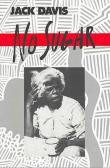
 1054860540287561462.jpg
Latest Issues
AbstractHistoryArchive Description
'The spirited story of the Millimurra family’s stand against government ‘protection’ policies in 1930s Australia.' (From the publisher's website.)
Reading Australia
This work has Reading Australia teaching resources.
Unit Suitable For
Unit Suitable For
AC: Year 12 (English Unit 3)
Themes
Aboriginality, belonging, connection to place, corruption, family, hypocrisy, isolation, love, Power, race, racism, resilience, violence, women
General Capabilities
Critical and creative thinking, Ethical understanding, Information and communication technology, Intercultural understanding, Literacy, Personal and social
Cross-curriculum Priorities
Aboriginal and Torres Strait Islander histories and cultures
Notes
-
A play with music.
Production Details
-
First produced by the Western Australian Theatre Company at the Maltings, Perth, Western Australia, in association with the Australian Elizabethan Theatre Trust for the Festival of Perth, 18 February 1985. Directed by Andrew Ross.
Revised version produced at the Expo '86 World Theatre Festival in Vancouver, Canada, 1986 and in London in 1988.
-
Director: Andrew Ross.
Cast: Jim Holland, Dorothy Collard, Lynette Narkle, Morton Hansen, John Pell, Lynley Narkle, Kelton Pell, Shane McNamara, Bill McCluskey, Dibbs Mather, Annie O'Shannessey, Sally Sanders, Charmaine Cole, Brooke Michael, Jedda Cole, Ernie Dingo, Richard Walley and Colin Kickett.
Designer: Steve Nolan.
Choreography and Music: Richard Walley.
-
The play was revised and remounted for participation in the Expo '86 World Theatre Festival in Vancouver. It was first performed on 15 May 1986 at the West End Community Centre, Vancouver.
Publication Details of Only Known VersionEarliest 2 Known Versions of
Other Formats
- braille, sound recording
Works about this Work
-
Fever in the Archive
single work
criticism
— Appears in: Humanities Australia , no. 5 2014; (p. 23-35)Anna Haebich investigates how the West Australian Department of Indigenous Affairs archives (1898-1972) have been utilised by Indigenous writers/researchers.
-
Parochial Canons : Teaching Australian Literature in Western Australia
2023
single work
criticism
— Appears in: JASAL , 10 August vol. 23 no. 1 2023;'In recent years, various studies have drawn attention to a lack of Australian literature being taught in secondary classrooms in Australia, with these findings often attributed to teachers’ minimal experience of Australian texts during their senior secondary and tertiary education. This paper draws on a state-wide study of texts studied in Year 12 English and Literature classrooms in Western Australia in 2018, which revealed that Australian works, and particularly Western Australian texts, were popular inclusions for study. The externally examined English course in WA not having a prescribed text list, yet this condition of text list expansion does not necessarily ensure that a wider variety of texts will be studied in schools. This paper explores some possible explanations for this situation by referring to sites of sociability and to the work of John Guillory on canonicity and cultural capital (1993), to consider the impact of a parochial canon on Western Australian English subjects.' (Publication abstract)
-
y
 Contemporary Settler Literature : Resources for Students and Teachers
St Lucia
:
AustLit: The Australian Literature Resource
,
2017
13356230
2017
single work
multimedia
bibliography
Contemporary Settler Literature : Resources for Students and Teachers
St Lucia
:
AustLit: The Australian Literature Resource
,
2017
13356230
2017
single work
multimedia
bibliography
'Here you will find an introduction to settler colonial theory and contemporary settler colonial literature. This exhibition is intended to survey the major and minor authors, works, and ideas involved with settler colonial writing in Australia, and, to a lesser extent, the United States, since the 1990s.
'In addition to the overview statements on this page, you can click on other tabs to see timeline of publication dates in historical context, a glossary of common terms, an annotated bibliography of primary and secondary sources, brief discussions of themes and motifs useful for student researchers and teachers interested in including settler colonialism in their curricula, and information about comparative settler colonial studies between Australia and the US.'
Source: Abstract.
-
Spinning the Dreamers : Jack Davis and the Drama of Assimilation
2015
single work
essay
— Appears in: Westerly , vol. 60 no. 1 2015; (p. 24-39) -
y
No Sugar, Jack Davis
Essendon North
:
Radiant Heart Publishing
,
2013
9377873
2013
single work
criticism
-
Untitled
1986
single work
review
— Appears in: The National Times , 13-19 June 1986; (p. 32)
— Review of No Sugar 1980 single work drama -
A Complete Unit of Invention
1990
single work
review
— Appears in: The Sydney Review , December no. 27 1990; (p. 18)
— Review of No Sugar 1980 single work drama -
History, Humour and Humanity
1990
single work
review
— Appears in: The West Australian , 3 September 1990; (p. 50)
— Review of No Sugar 1980 single work drama -
Sweet Revenge
1990
single work
review
— Appears in: The Adelaide Review , November no. 82 1990; (p. 26-27)
— Review of No Sugar 1980 single work drama -
Untitled
1994
single work
review
— Appears in: The Australian , 24 June 1994; (p. 10)
— Review of No Sugar 1980 single work drama -
The Making of an Aboriginal Theatre
1986
single work
column
— Appears in: Fremantle Arts Review , July vol. 1 no. 7 1986; (p. 12-13) -
Reading the Signs : A Semiotic Perspective on Aboriginal Theatre
1997
single work
criticism
— Appears in: Aratjara : Aboriginal Culture and Literature in Australia 1997; (p. 149-164) -
y
Creating Frames : Contemporary Indigenous Theatre : 1967-1990
St Lucia
:
University of Queensland Press
,
2004
Z1109707
2004
single work
criticism
From publisher's blurb (back cover): Creating Frames provides the first significant social and cultural history of Indigenous theatre across Australia. As well as using archival sources and national and independent theatre company records, much of this history is drawn from interviews with individuals who have shaped contemporary Indigenous theatre in Australia - including Bob Maza, Jack Charles, Gary Foley, Justine Saunders, Weley Enoch, Ningali, and John Harding...
Creating Frames traces the history of production of texts by Indigenous Australian artists from 1967 to 1997. It includes productions in theatres of texts by Indigenous Australian artists, collaborations between Indigenous and non-Indigenous artists, and adaptations of texts by Indigenous artists. The focus is public urban commercial productions and includes national and international premieres and tours. 'Commercial' is used here in the sense of public presentations open to any potential audience member as distinct from closed community productions. The focus does not include radio plays, millennia of traditional practices, performances devised and performed within communities, or community outreach/education theatre initiatives such as HeatWorks in the Kimberley. Even within these limits the constraints of space have affected the number of productions that can be covered in detail.
Throughout this thirty year period, particular themes recur, these themes relate to the ways in which the external framing of the work either facilitates or blocks production. These themes often relate directly or indirectly to concepts of 'authenticity' and/or 'Aboriginality' - in effect the 'acceptable' face of Aboriginality within government and social narratives at any point in time. The strength and power of these themes as frames for the work has drawn on generally accepted understandings of Australian history and the ways in which these are manipulated in the service of political agendas. These frames fall into three main categories within the thirty year period - assimilation, multiculturalism and reconciliation. This production history reveals that, rather than Euro-Australian theatre practitioners creating an environment that enabled Indigenous theatre practice, Indigenous artists have taken their own initiative. An initiative they continue to take whilst simultaneously contesting the primarily external frames that define their work and affect their production possibilities.
(Abstract courtesy the author.)
-
Looking at Them Looking at Us : Jack Davis's No Sugar?
1994
single work
criticism
— Appears in: Australia in the World : Perceptions and Possibilities 1994; (p. 40-44) -
The Australian Aborigines' Struggle Against Authority: An Historical Perspective on Government, Military, and a Corrupted Christianity in Jack Davis' No Sugar
2006
single work
criticism
— Appears in: Journal of Theatre and Religion , July vol. 5 no. 1 2006; (p. 51-60)
Awards
- 1992 winner Australian Centre Literary Awards — The Kate Challis RAKA Award — Drama
- 1987 Special Western Australia Week Literary Award — Special
- 1987 winner Western Australian Premier's Book Awards — Special Award
- 1987 winner Human Rights Awards
- 1986 joint winner AWGIE Awards — Stage Award — Original
- Northam, Northam area, Northam - Southern Cross area, Southwest Western Australia, Western Australia,
- Mogumber, Victoria Plains area, Moora - Victoria Plains area, Southwest Western Australia, Western Australia,
- Moore River Native Settlement (1918-1951), Western Australia,
- 1930s